The Ring That Says Enough: Jade Signets and the New American Masculine Style

Photo by Photo by Angelo Moleele on Unsplash on Unsplash
From Seal to Signet
The signet ring has never been merely decorative. In its European and American iterations, it began as a practical instrument: a carved intaglio or crest pressed into wax to authenticate a document or seal a letter. Over time, the ring became a marker of family, institution, and personal affiliation. Its form is simple, often a broad oval or cushion face set on a substantial shank, but its meaning has always depended on what is carved into it and who wears it.
For American men, the signet has usually appeared in gold, occasionally with a hardstone face. Onyx, carnelian, and bloodstone have long been familiar choices. Jade enters this tradition with a different temperament. It is not glossy in the same way as a polished black stone, nor does it carry the same heraldic associations. Instead, it offers depth, subtle variation, and a surface that seems to hold light rather than reflect it.
Why Jade Changes the Equation
Jade signet rings are appealing precisely because they do not announce themselves in the language of luxury that many men have learned to distrust. A gold signet can read as inherited or institutional. A diamond ring reads as celebration. A jade signet reads as considered. It has presence, but its presence is quiet.
That quietness suits a growing segment of American men who are comfortable with fine jewelry but wary of ostentation. They may already collect watches, but a watch is often read through brand and mechanism. They may wear cufflinks, but cufflinks belong to formal dress. A jade signet can be worn with a blazer, a knit polo, or a plain shirt. It sits at the intersection of tradition and personal taste without requiring a costume.
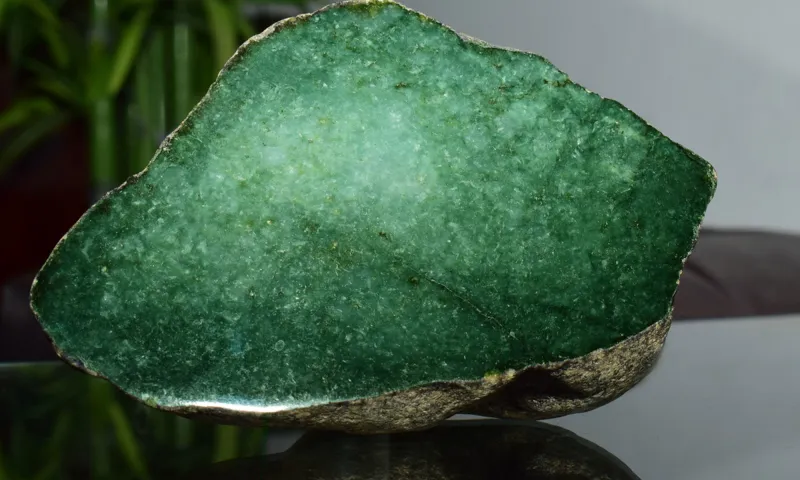
Jade also offers something that metal alone cannot: natural variation. No two stones are identical. Color, translucency, veining, and surface texture differ from piece to piece. For a man choosing his first serious jewelry, that singularity can be more meaningful than a logo. The ring becomes his because the stone is his alone.
The Shape of Restraint
The most successful jade signets tend to favor proportion over scale. A face that is too large can look theatrical; one that is too small loses the signet's distinctive weight. The classic oval remains the safest form, though cushion and softly rounded rectangular faces are appearing in contemporary work. The shank should feel substantial enough to balance the stone without becoming heavy on the hand.
Setting choices matter as much as shape. A bezel setting protects the stone and gives the ring a clean, modern line. A gypsy setting, where the stone sits nearly flush with the metal, offers durability and a more understated profile. Traditional claw settings can work, but they require careful execution to avoid a fussy look. For everyday wear, protection should take priority over exposure.
Engraving and Setting
A signet ring is personal, and engraving is where that personality becomes visible. Some men choose a family crest or initials in the traditional manner. Others prefer a monogram in a modern typeface, a date, or a private symbol. The engraving should be designed for the stone and the wearer, not copied from a catalogue.
Jade requires a skilled hand. It is harder than many people assume, but it is not invincible, and a poorly executed engraving can damage the surface or leave a design that lacks clarity. Collectors should ask who will cut the stone and whether the workshop has experience with jade specifically. If the stone is particularly fine, a plain face may be the more elegant choice; the material itself becomes the mark.
Building a Rotation
For men new to serious jewelry, the jade signet works best as part of a small rotation rather than a solitary statement. It can be worn alongside a simple wedding band, a dress watch, or a chain that sits close to the neck. The goal is not to match metals rigidly but to create a coherent personal style. A jade signet in yellow gold reads differently from one in white gold or platinum, and the choice should reflect the wearer's existing wardrobe and habits.
American collectors are also beginning to treat the signet as an entry point into jade connoisseurship. A ring demands close looking. The wearer sees the stone every day, notices how light moves across it, and learns its surface. That daily intimacy is one of the oldest forms of collecting, and it may prove more durable than the pursuit of the next acquisition.
The Next Frontier
The jade signet is not a trend that depends on novelty. It draws on a long history and adapts it to a contemporary American wardrobe that values restraint, material integrity, and personal meaning. For men moving beyond watches and cufflinks, it offers a first serious jewelry purchase that can be worn often, understood slowly, and passed on with purpose.