Beyond the Solitaire: How Jade Is Becoming the Engagement Stone of a More Discerning Generation
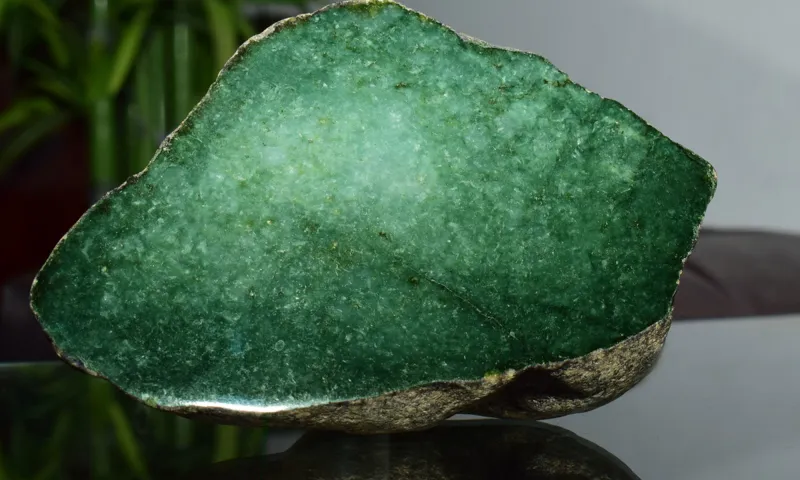
Photo: jade gemstone engagement ring close-up luxury jewelry, via mindbodygreen-res.cloudinary.com
For much of the twentieth century, the diamond solitaire occupied an almost unassailable position in American romantic culture. It was the stone that said serious, the stone that said forever, the stone that required no explanation at a dinner table or an office party. It arrived pre-loaded with meaning, its symbolism manufactured with remarkable precision by a single corporation and absorbed so thoroughly into the national imagination that questioning it felt, for decades, almost impolite.
That era is ending.
Not with a dramatic rupture, but with the quiet, considered choices of a generation of affluent Americans who have grown accustomed to asking harder questions about the things they consume — and who have discovered, often through a jeweler's display case or a trip abroad or simply a long afternoon of research, that jade offers something the diamond industry never quite managed to deliver: authenticity.
The Marketing Curtain, Pulled Back
The story of how diamonds became synonymous with engagement is well documented. De Beers' mid-century advertising campaigns did not merely sell stones; they constructed a cultural ritual from near-whole cloth, calibrating spending expectations and cementing the solitaire as the only acceptable symbol of romantic intent. For a generation raised on transparency — on ingredient lists and supply-chain disclosures and the expectation that brand narratives will be interrogated — that history carries weight.
"My clients in their thirties and forties are not anti-diamond in any aggressive sense," says one independent jeweler based in Manhattan who has seen a marked increase in jade engagement inquiries over the past four years. "They're simply aware. They know the history of diamond marketing, they've read about conflict sourcing, and they arrive at my counter having already decided they want something that didn't require a multinational campaign to tell them it was meaningful."
Jade, by contrast, has spent roughly five thousand years accumulating meaning without the assistance of an advertising agency. In Chinese culture, it is the stone of virtue, of enduring connection, of the qualities one hopes to embody across a lifetime. In Mesoamerican traditions, it outranked gold as the supreme material of ceremony and status. These are not invented associations. They are sedimentary — layered over centuries by civilizations that chose jade not because they were told to, but because the stone earned its place in their symbolic vocabulary.
What Jade Offers That Diamond Cannot
Beyond the question of marketing history, jade presents a set of aesthetic and philosophical propositions that resonate with buyers who prize individuality. No two pieces of high-quality jadeite are identical. The interplay of translucency, color saturation, and internal texture — what connoisseurs call texture and clarity of structure — means that a jade engagement ring is, by its very nature, singular. There is no standardized grading scale that reduces it to a number on a certificate, no universal cut that makes one stone interchangeable with the next.
"We chose a pale green jadeite cabochon set in rose gold," says a Brooklyn-based architect who became engaged last spring. "When people ask about it, I get to tell them something. I get to explain what jadeite is, where it comes from, why the color matters. The ring opens a conversation rather than closing one."
This quality — the ring as conversation rather than declaration — appears repeatedly in accounts from couples who have made the shift. The diamond solitaire, for all its brilliance, communicates a single, pre-scripted message. A jade ring communicates the particular sensibility of the person who chose it.
The Jewelers Responding to the Moment
Across American cities with established fine jewelry cultures — New York, Los Angeles, Chicago, San Francisco — independent ateliers report that jade engagement inquiries have become a recognizable category of client rather than an occasional curiosity. Designers who once worked primarily in sapphires and rubies describe learning the stone's vocabulary in response to sustained demand.
What they are learning is demanding. Jade suitable for engagement jewelry — stones that will bear daily wear with grace, that will hold their surface and their color across decades — requires a level of material knowledge that exceeds what most Western jewelers were trained to apply. The distinction between jadeite and nephrite, the identification of treatment grades, the sourcing of material with credible provenance: these are not trivial matters, and reputable jewelers are investing in the expertise to navigate them properly.
"The clients who want jade are not casual buyers," notes one Los Angeles-based designer who has made jade a centerpiece of her bridal collection. "They've researched the stone. They know what Type A means. They ask about Myanmar sourcing and they mean it. My job is to be worthy of their seriousness."
Symbolism That Earns Its Place
Perhaps the most compelling argument for jade as an engagement stone — one that cultural critics and jewelers alike return to — is the question of earned symbolism. The diamond's association with eternal love was constructed. Jade's association with enduring virtue, with connection across generations, with the qualities that sustain a long partnership, was accumulated.
The stone has been placed in tombs to accompany the honored dead. It has been worn by emperors as an expression of moral character. It has been passed from grandmothers to granddaughters as the most serious form of affection a family could express. These are not marketing claims. They are history.
For a generation that has grown skeptical of the manufactured and hungry for the genuinely resonant, that distinction matters enormously. The jade engagement ring does not require a campaign to explain why it is meaningful. It requires only the willingness to learn its story — and the confidence to make that story one's own.
Choosing Well
For those moved by this shift to explore jade as a bridal stone, a few principles merit early attention. Type A jadeite — untreated, natural, bearing its color and structure exactly as the earth produced it — is the only appropriate choice for a piece intended to last a lifetime. Treatment grades B and C involve chemical impregnation or dyeing that will not endure the decades a ring must. Provenance documentation, while not universally available, adds both confidence and future value. And the setting should be chosen not merely for aesthetics but for the practical reality that jade, while durable, rewards a protective bezel or well-proportioned prong arrangement.
The stone you choose for an engagement ring is, in the most literal sense, the first object your partnership will share with the world. Choosing one with five thousand years of human meaning behind it is not a departure from romance. It may, in fact, be its truest expression.