Worn Without Words: How the Details of a Jade Bangle Speak Fluently to Those Who Listen
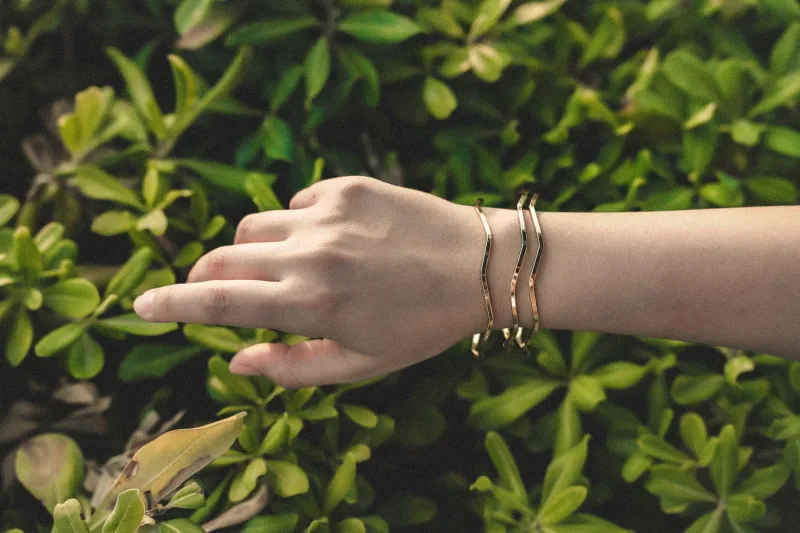
There exists, within the world of serious jade collecting, a shared literacy that operates beneath ordinary conversation. It requires no explanation between those who possess it, and it remains entirely invisible to those who do not. A jade bangle, passed over by the uninitiated as a decorative circle of green stone, is read by the knowledgeable eye the way a sommelier reads a glass of wine — with precision, with context, and with the quiet confidence that comes from years of study. Every element of that bangle, from the diameter of its bore to the subdued luminosity of its surface, contributes to a message that its wearer may or may not be sending deliberately.
In America's most discerning collector circles — from the private galleries of Manhattan's Upper East Side to the estate auction previews of Beverly Hills — that message is always received.
The Fit That Announces Everything
Among those fluent in jade culture, the way a bangle sits on the wrist is the first and most immediate signal. A bangle that slides freely, barely grazing the hand as it passes over the knuckles, speaks to a casual relationship with the stone — perhaps a gift accepted rather than sought, or a piece chosen for appearance alone. By contrast, a bangle worn snug, requiring the deliberate passage of oil and patience to work over the hand, communicates something entirely different. It announces commitment. It suggests that the wearer selected this particular piece with full awareness of what a fitted bangle represents: permanence, intention, and a willingness to live with the stone rather than simply display it.
The tradition of wearing jade bangles close to the skin carries deep cultural resonance, particularly within Chinese-American communities where the practice has been passed through generations of women who understood that jade and the body are meant to interact. For the contemporary American collector who has absorbed this tradition through study rather than inheritance, choosing a properly fitted bangle is an act of fluency — a signal that she has done the work of understanding what she wears.
Translucency as a Measure of Sincerity
If fit communicates commitment, translucency communicates taste. The degree to which light penetrates a jade bangle — what collectors and gemologists describe as its diaphaneity — is among the most telling indicators of quality in jadeite. Stones that hold light within them, appearing to glow faintly from an interior source, are among the most coveted in the world. Those that sit opaque and heavy, absorbing light rather than engaging with it, occupy an entirely different tier.
Within connoisseur circles, a wearer whose bangle demonstrates that characteristic inner luminosity — especially when set against the skin in natural daylight — signals an investment made with genuine knowledge. She did not simply purchase the most vibrantly colored option at the display case. She understood that true quality in jadeite lives in its relationship with light, and she was willing to pay accordingly for that relationship.
This is a distinction that separates the serious collector from the casual buyer as efficiently as any appraisal document. The stone announces itself.
The Subtlety of Surface: What Polish Reveals
Few elements of a jade bangle are more revealing to the educated eye than the quality of its finish. A surface that has been worked to a high, almost glassy polish — brilliant and reflective — represents one school of presentation. It catches attention readily and photographs with drama. However, within certain collector communities, this level of polish is regarded with measured skepticism, associated as it sometimes is with commercial production techniques that prioritize visual impact over material integrity.
The alternative — a finish described variously as waxy, silky, or satin — is considered by many connoisseurs to represent the more honest expression of the stone. This softer polish does not perform for the room. It rewards proximity and touch. It suggests that the lapidary trusted the material itself to carry the piece, rather than relying on a reflective surface to do the work of quality. Among those who know, a bangle with a restrained, waxy finish frequently signals a more serious provenance and a more considered acquisition.
For the American wearer building a collection with both aesthetic and investment purpose, understanding this distinction is not merely academic. It informs every purchase decision and, over time, defines the character of an entire collection.
Color as Personal Branding
The color of a jade bangle is perhaps its most legible signal — and yet it is also the most frequently misread. The popular imagination defaults to a single vision of jade: deeply saturated, uniformly vivid green. Imperial green. The color of the finest jadeite from Myanmar's Hpakant mines, the color that commands the highest prices at Sotheby's and Christie's, the color that most non-collectors associate with the stone itself.
But among those who wear jade with genuine sophistication, color selection is rarely about chasing the most obvious marker of value. A pale, near-translucent bangle of celadon or ice-green communicates a preference for restraint and an understanding that rarity takes many forms. A lavender jadeite bangle — soft, unusual, and deeply prized within collector communities — announces a wearer who has moved beyond the expected and into the genuinely rare. A deep spinach-green nephrite bangle, worn with the confidence of historical knowledge, speaks to an appreciation for the stone's older tradition, predating the jadeite era entirely.
Each color choice, in other words, functions as a statement of values. The wearer who selects imperial green for its undeniable magnificence is making one declaration. The wearer who chooses a subtly mottled, pale green bangle of exceptional translucency is making another — quieter, perhaps, but no less intentional.
The Vocabulary Beneath the Surface
What distinguishes the most compelling wearers of fine jade is not the value of the stone on their wrist, but the deliberateness of every choice that stone represents. In a culture saturated with luxury goods that announce themselves loudly, jade operates differently. Its signals are precise and quiet. They reward attention from those equipped to offer it, and they pass unnoticed by those who are not.
For the American collector who has invested not merely in the stone but in the knowledge required to choose it well, this is precisely the point. A jade bangle worn with understanding is not a status symbol in the conventional sense. It is a conversation — one conducted in the language of fit, finish, translucency, and color — offered only to those with the literacy to receive it.
That exclusivity, ultimately, is its own form of luxury.