The New Bridal Stone: How Jade Is Rewriting the Rules of Wedding Jewelry
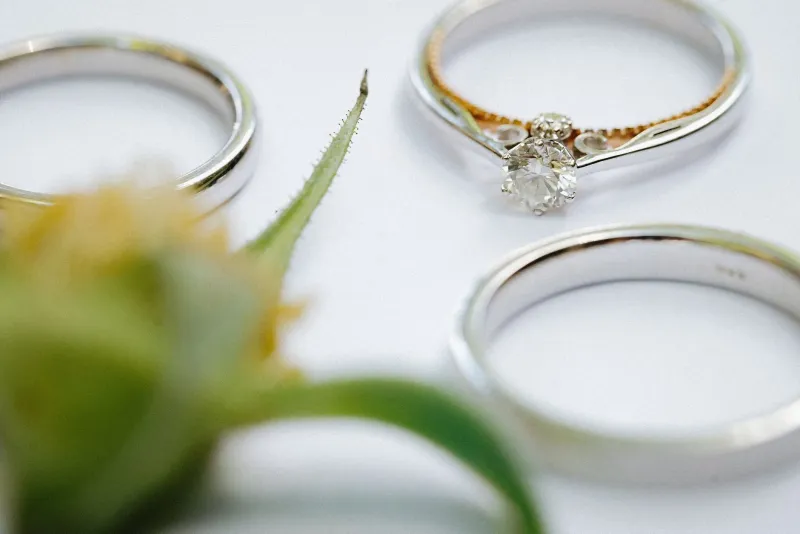
The American bridal jewelry market has long operated within a narrow set of conventions. A round or cushion-cut diamond, a white metal band, perhaps a strand of pearls for the ceremony. These choices are not without merit — they are, after all, the product of decades of cultural reinforcement and genuine aesthetic refinement. But for a particular kind of bride, the kind who approaches every significant acquisition with the same research and intentionality she brings to art collecting or travel, the standard bridal set has begun to feel insufficient.
These women are not rejecting tradition so much as expanding it. And an increasing number of them are arriving at the same unconventional conclusion: jade.
A Stone With Something to Say
The appeal of jade as a bridal stone is not purely visual, though its visual case is formidable. What distinguishes jade from virtually every other gemstone in the bridal market is the density of meaning it carries — meaning that, crucially, aligns with precisely what a wedding is supposed to represent.
In Chinese cultural tradition, jade is the stone of love, virtue, and longevity. It has been exchanged between lovers and gifted to brides for thousands of years. The Maori people of New Zealand regard nephrite jade — pounamu — as a taonga, or treasure, passed through generations as an embodiment of the relationships and memories it has witnessed. In ancient Mesoamerican cultures, jade outranked gold in sacred significance.
For American brides who have grown up in multicultural households, who have traveled widely, or who simply feel that a diamond's cultural narrative — shaped largely by twentieth-century marketing — does not reflect their own values, jade offers an alternative story. One that is older, richer, and considerably less manufactured.
What Jade Brings to the Setting
From a purely gemological standpoint, jadeite — the rarer and more intensely colored of the two jade minerals — is a genuinely extraordinary stone. Fine imperial green jadeite, semi-transparent and evenly saturated, commands prices that place it among the world's most valuable gem materials. A high-quality jadeite cabochon in an engagement ring is not a compromise or an eccentricity. It is, by any objective measure, a serious gemstone choice.
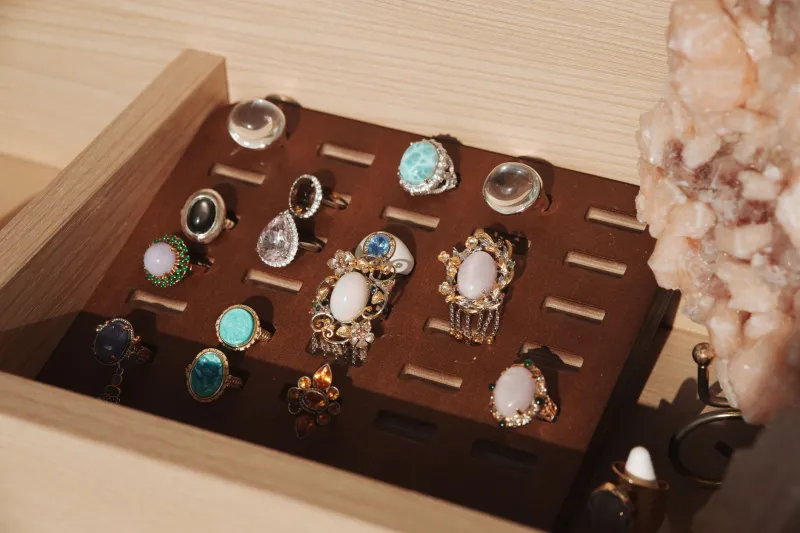
Beyond imperial green, jadeite presents a palette that suits a wide range of personal aesthetics. Lavender jadeite — soft, romantic, and increasingly sought after — pairs naturally with rose gold and pink diamond accents. White or icy jadeite, with its near-translucent quality, reads as quietly bridal without the visual weight of a large diamond. Deep spinach-green nephrite, more muted in tone, suits brides who favor a more understated, nature-forward aesthetic.
The stone's characteristic texture — that smooth, slightly waxy surface that gemologists call "resinous luster" — gives it a warmth that faceted stones cannot replicate. Worn against the skin, a jade ring or bracelet feels present in a way that a brilliant-cut diamond, for all its fire, does not.
US Jewelers Crafting the New Bridal Jade
A handful of American jewelry studios have recognized this emerging appetite and positioned themselves to meet it with genuine craft. Rather than simply sourcing cabochons and setting them in standard mountings, these artisans are approaching jade bridal commissions as the complex, bespoke projects they deserve to be.
The process typically begins with stone selection — often the most time-intensive part of the commission. A jeweler working with a client on a jade engagement ring will source multiple candidate stones, presenting them in person or through detailed photography and video so the client can assess color, translucency, and natural patterning. No two pieces of jade are identical, and the inclusions, color zoning, and surface character that distinguish one stone from another are treated as defining features rather than imperfections.
Setting styles for jade engagement rings tend to favor protective designs that honor the stone's profile. Bezel settings are particularly well suited to jade cabochons — they secure the stone securely while framing it cleanly, allowing the eye to rest on the jade itself rather than the metalwork. Halo settings, when used, are typically composed of smaller diamonds or pearls that complement rather than compete with the jade's color. East-west horizontal settings have also become popular for oval or elongated jade cabochons, offering a contemporary silhouette that reads as fashion-forward without sacrificing the stone's traditional resonance.
Building a Bridal Suite Around Jade
For brides who wish to wear jade throughout their wedding day — not merely in an engagement ring but in a complete suite of jewelry — the styling possibilities are considerable.
The most natural companion for jade is the pearl. South Sea pearls and jade have a long shared history in fine jewelry, and the pairing works because both materials carry a similar quality of restrained luminosity. A jade and pearl necklace worn with a jadeite engagement ring and simple diamond stud earrings creates a bridal look of exceptional refinement — one that references tradition without replicating it.
For brides who prefer a more contemporary approach, jade can be combined with white diamonds in a way that allows each stone to occupy its own visual territory. A jade bangle worn alongside a diamond tennis bracelet. A jadeite pendant on a fine diamond-set chain. A jade and diamond cocktail ring worn on the right hand to balance a more traditional engagement ring on the left.
Metal choices matter considerably. Yellow gold and jade have a historical affinity, but many American brides today find that white gold or platinum allows jade's color to read more clearly, particularly with lighter-toned stones. Rose gold, as noted, pairs beautifully with lavender jadeite and creates a warmer, more romantic overall impression.
The Heirloom Argument
Perhaps the most compelling case for jade as a bridal stone is the one that unfolds over time. A fine jade piece, properly cared for, does not diminish. Its color does not fade. Its surface, if scratched, can be re-polished. And because jade's value in the fine jewelry market has demonstrated consistent appreciation over decades — particularly for high-quality jadeite of documented provenance — a jade engagement ring or bridal suite represents a genuine investment in the traditional sense of the word.
Brides who choose jade are not simply selecting a beautiful object for their wedding day. They are acquiring something that may well be passed to a daughter or granddaughter, carrying with it the story of the day it was first worn and the life that followed. In a market saturated with mass-produced bridal jewelry, that kind of continuity is, itself, a form of luxury.
The diamond solitaire will not disappear. But for the bride who insists on meaning alongside beauty, jade has quietly, compellingly, made its case.