The Art of the Pairing: How Fine Jewelers Are Combining Jade with Other Precious Stones
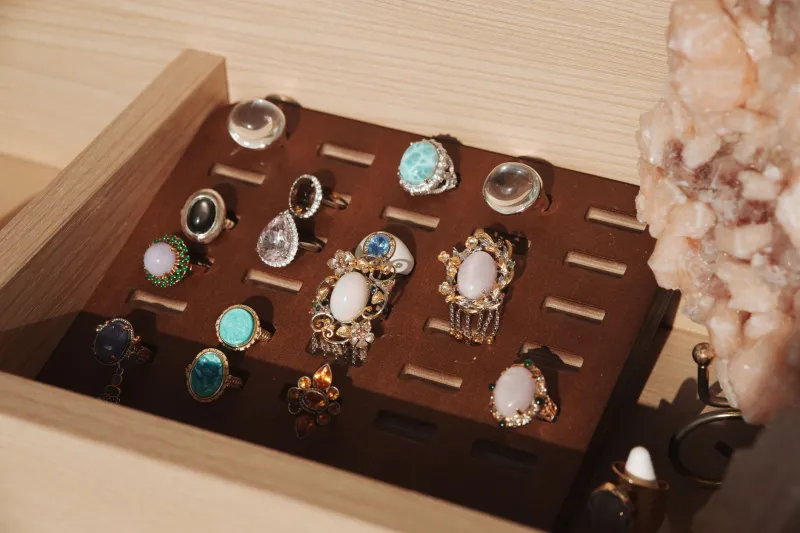
There is a long tradition, particularly in Western fine jewelry, of treating each stone as a soloist — chosen for its own brilliance and displayed accordingly. Jade, with its dense color saturation and quietly authoritative presence, has often been the most emphatic practitioner of this philosophy. A jadeite bangle needs nothing else on the wrist. A carved nephrite pendant speaks for itself.
And yet, among the jewelers, gemologists, and style-conscious collectors who are reshaping American fine jewelry culture, a more nuanced conversation is taking place. The question is no longer whether jade can stand alone — it unquestionably can — but whether, in the right company, it can reveal dimensions of itself that solitary display simply does not allow.
The answer, according to those working at the intersection of gemology and design, is a considered and qualified yes.
Understanding Jade's Visual Language Before You Layer
Before exploring what works alongside jade, it is worth articulating what jade brings to any pairing. Unlike the crystalline transparency of a diamond or the vivid internal fire of a fine ruby, jade's beauty is fundamentally about surface and density. Its color — whether the saturated emerald of imperial jadeite or the softer, more meditative green-grey of nephrite — does not radiate outward so much as it absorbs and holds the light.
This quality, which gemologists describe in terms of translucency and luster, has profound implications for pairing. Jade does not compete for light the way a faceted stone does. It grounds. It anchors. In the vocabulary of jewelry composition, it functions more like a deep, resonant bass note than a high, clear melody.
This means that the stones most likely to complement jade are those that either contrast with its density — offering transparency and sparkle where jade offers solidity — or those that echo its meditative quality at a different point on the color or tonal spectrum.
Jade and Pearl: A Study in Complementary Restraint
Of all the pairings that fine jewelry stylists return to most consistently, the combination of jade and pearl may be the most instinctively understood. Both materials carry a softness of surface that separates them from the harder brilliance of faceted gems. Both are associated with a kind of unhurried elegance that resists fashion's more aggressive cycles.
In practice, the pairing works beautifully because the two materials occupy adjacent but distinct territories. A strand of South Sea pearls — their warm, creamy luster carrying just a suggestion of pink or gold — creates a tonal conversation with a green jadeite pendant without overwhelming it. Akoya pearls, with their cooler, more silvery surface, pair particularly well with the blue-greens and lavenders of certain jadeite varieties, a combination that several New York-based jewelers have begun incorporating into bespoke commission work.
Gemologists note that the pairing also carries symbolic coherence. Both jade and pearl are associated with purity, longevity, and feminine wisdom across multiple cultural traditions — a resonance that adds a layer of meaning to the aesthetic relationship.
The Case for Rose Quartz: Warmth Against Depth
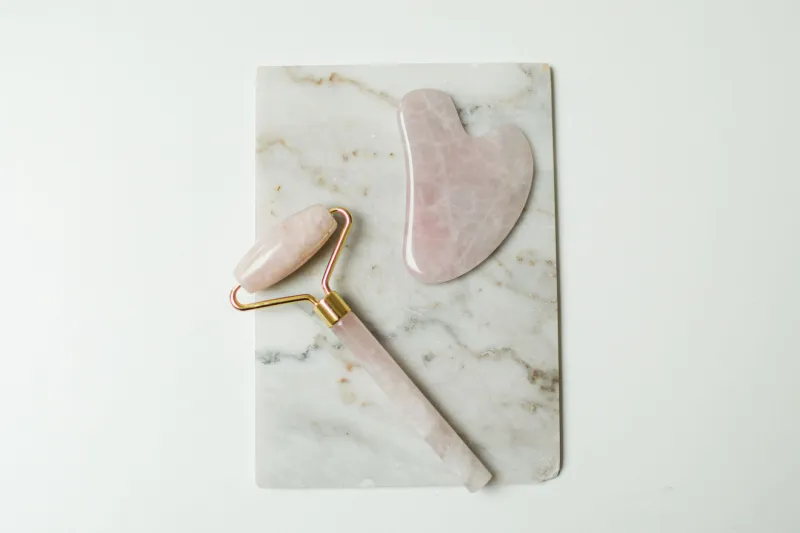
Rose quartz has experienced something of a cultural rehabilitation in recent years, moving from the realm of wellness boutiques into more serious fine jewelry contexts. When paired thoughtfully with jade, the reasons for this elevation become immediately apparent.
The soft blush of rose quartz — particularly in its more translucent, high-clarity forms — creates a counterpoint to jade's density that is both visually striking and tonally balanced. Where jade holds and absorbs, rose quartz allows light to pass through it, creating a sense of warmth and openness. On the wrist, a jade bangle worn alongside a rose quartz beaded bracelet achieves a layered effect that is far more sophisticated than either piece alone might suggest.
Jewelers working with color theory point to the complementary relationship between green and pink on the spectrum as one reason this pairing feels so instinctively right. But there is also a textural dimension: the smooth, almost watery surface of polished rose quartz sits in pleasing contrast to the denser, more opaque presence of carved jade.
For collectors interested in the energetic symbolism that many wearers attach to their stones, the pairing carries additional resonance. Jade is traditionally associated with protection, wisdom, and clarity of purpose. Rose quartz is linked to compassion and emotional openness. The combination, for those who engage with their jewelry on this level, suggests a kind of balance — grounded wisdom alongside receptive warmth.
Onyx: The Power of Contrast
If the jade-and-pearl pairing represents complementary restraint, and jade with rose quartz speaks to tonal warmth, then jade alongside onyx is something altogether bolder — a study in the dramatic potential of contrast.
Black onyx, with its polished, almost lacquer-like surface, does not soften jade so much as it sharpens it. The deep, light-absorbing quality of onyx makes even a relatively modest piece of green jade appear more vivid by comparison. In necklace design, alternating jade and onyx beads create a visual rhythm that is simultaneously graphic and luxurious — a combination that photographs strikingly well and reads as authoritative in person.
Several American jewelers working in the contemporary fine jewelry space have embraced this pairing as a way of giving jade a more architectural, less overtly traditional presence. The result appeals to collectors who love jade's material quality but seek a visual language that feels current rather than referential.
Gemologists caution that the hardness differential between jade and onyx — both are relatively durable, but onyx is somewhat more susceptible to surface scratching — warrants attention in pieces where the two materials are in direct contact. Proper setting and spacing, as any skilled jeweler will confirm, resolves this concern entirely.
Diamonds and Jade: Rethinking the Classic
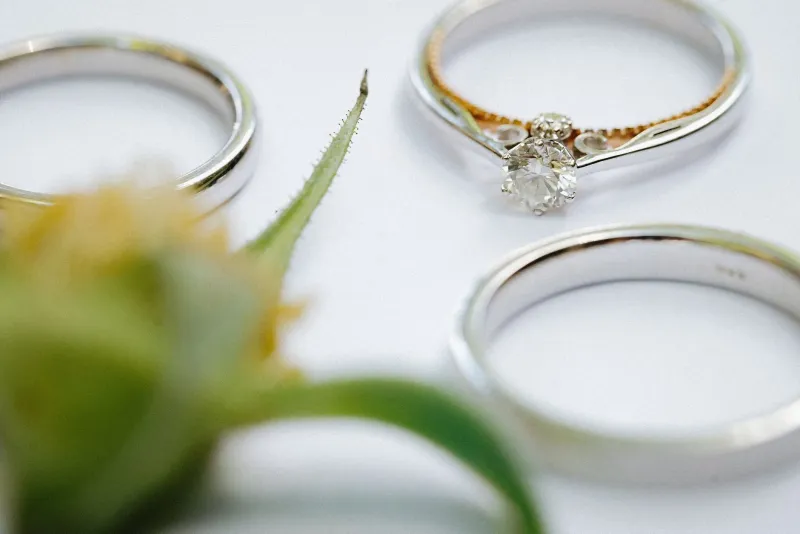
The pairing of jade with diamonds is perhaps the most commercially established of the combinations discussed here, and also the one most frequently executed without sufficient thought. Diamond and jade settings are common in both antique and contemporary jewelry — but the most successful examples are those in which the diamond functions as a framing device rather than a competing focal point.
Pavé diamond borders around a carved jadeite cabochon, or a single brilliant-cut diamond set at the clasp of a jade bead necklace, allow the jade to remain primary while the diamond contributes sparkle and a sense of occasion. The error, jewelers note, occurs when the diamond allocation is so generous that it begins to compete with the jade for visual dominance. At that point, the piece loses its coherence.
When the balance is right, however, the combination carries a particular authority. The transparency and fire of a well-cut diamond makes the jade's solidity and color appear all the more intentional, all the more chosen.
Building a Paired Collection with Intention
For the collector approaching these combinations as an investment in wearable art, a few principles hold consistent across all the pairings discussed here. First, quality in the jade should not be sacrificed in favor of quantity in the accompanying stone. A fine piece of imperial jadeite paired with modest pearls will always read as more considered than the reverse.
Second, the setting material matters. Yellow gold warms jade's greens and amplifies its connection to rose quartz and pearl. White gold and platinum create a cooler, more contemporary context that serves the jade-and-diamond and jade-and-onyx pairings particularly well.
Finally, and perhaps most importantly: the pairing should feel like a conversation, not a competition. Jade has spent thousands of years earning the right to be the most significant presence in any room it enters. The stones that serve it best are those that understand, and honor, that distinction.