Between Ancient Wisdom and Modern Evidence: What Science Truly Reveals About Jade and the Body
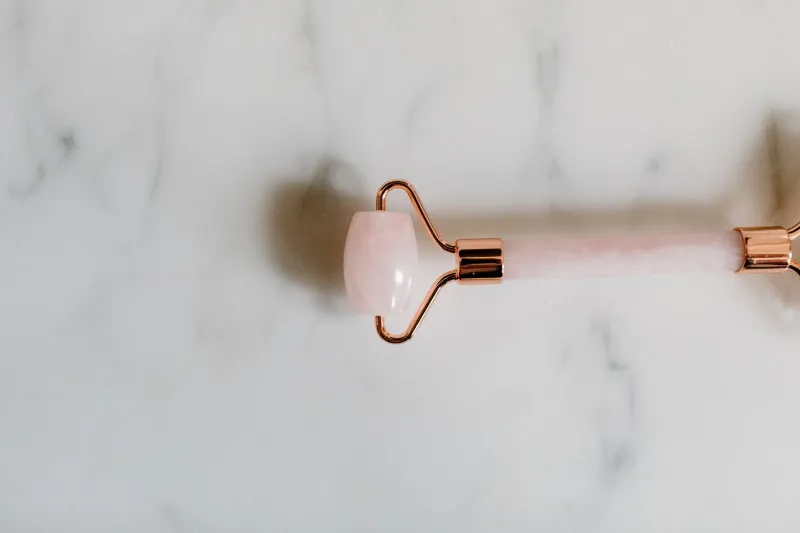
The jade roller sitting on a bathroom vanity in Marin County or the Upper East Side is, depending on whom you ask, either a sophisticated wellness instrument with deep historical roots or an elegantly packaged placebo. The truth, as is so often the case when ancient tradition meets contemporary scrutiny, resides somewhere more interesting than either extreme.
Jade has been placed against human skin for roughly five thousand years. Chinese imperial physicians prescribed nephrite worn at the wrist to regulate qi. Mesoamerican healers buried jade with the deceased to ease the passage between worlds. In New Zealand, Māori carvers shaped nephrite into hei-tiki pendants believed to carry protective life force. These are not fringe practices from isolated communities — they are among the most persistent wellness beliefs in human history, spanning cultures with no contact with one another. That convergence alone warrants serious attention.
Yet serious attention is precisely what the wellness industry has not always provided. The jade roller boom of the past decade — a market now valued in the hundreds of millions of dollars in the United States alone — has generated extraordinary commercial enthusiasm and comparatively modest scientific investigation. Green's Jade believes its readers deserve a more rigorous accounting.
What Mineralogy Tells Us About Jade's Physical Properties
To understand jade's potential effects on the body, one must first understand what jade actually is — a distinction that matters more than most consumers realize. True jade encompasses two distinct minerals: nephrite, a calcium magnesium silicate, and jadeite, a sodium aluminum silicate. Both are dense, relatively cool to the touch, and capable of retaining lower temperatures longer than materials such as rose quartz or synthetic alternatives.
Dr. Emily Hartwell, a mineralogist affiliated with a university geology department in the Pacific Northwest, explains the significance plainly: "Nephrite and jadeite have a thermal conductivity that makes them feel cooler against the skin than ambient room temperature would suggest. That's not mystical — it's physics. But the cooling effect is real, measurable, and sustained in a way that cheaper substitutes simply cannot replicate."
This physical property has practical implications. Prolonged contact with a cool, smooth stone surface against facial tissue or the inner wrist does produce a mild vasoconstrictive response — a temporary narrowing of superficial blood vessels. Dermatologists note that this is the same mechanism behind the use of cold compresses to reduce puffiness, and it explains why jade facial tools, when kept refrigerated and used with appropriate technique, can produce a visible if temporary reduction in morning facial swelling.
The Skin-Contact Question: Dermatological Perspectives
Board-certified dermatologist Dr. Simone Adeyemi, who practices in Beverly Hills and counts several integrative wellness clients among her patients, offers a measured assessment. "There is no peer-reviewed clinical evidence that jade, as a material, delivers bioactive compounds to the skin or produces cellular-level changes," she states. "What we can say is that the ritual of using a smooth, cool instrument with gentle lymphatic massage technique — regardless of the stone — has demonstrable short-term cosmetic effects. The question of whether jade specifically adds anything beyond its thermal properties is one the research simply has not answered yet."
That absence of evidence, Dr. Adeyemi is careful to note, is not the same as evidence of absence. Formal clinical trials on gemstone wellness applications remain scarce, partly because such research attracts limited pharmaceutical funding. The gap between traditional use and scientific validation is, in many cases, a gap in research investment rather than a gap in efficacy.
Integrative medicine practitioners tend to approach the question from a broader vantage point. Dr. Marcus Tran, who runs an integrative health practice in Austin and incorporates elements of Traditional Chinese Medicine alongside evidence-based protocols, suggests that the Western instinct to isolate a single active mechanism may itself be limiting. "In the TCM framework, the benefits of nephrite are understood systemically — the stone is believed to interact with the body's energy meridians, particularly those associated with the heart and kidneys. Western science doesn't have a validated model for meridian theory, but that doesn't mean the outcomes patients report are imaginary. It means we lack the measurement tools."
The Psychology of Ritual and Its Measurable Effects
Perhaps the most scientifically robust argument for jade's wellness value lies not in its mineralogy but in its role as a ritual object. Research in psychoneuroimmunology — the study of how psychological states influence immune function — has established that deliberate, repeated self-care rituals can meaningfully reduce cortisol levels, lower resting heart rate, and improve subjective measures of stress. The mechanism is not the object itself but the intentional pause it creates.
For affluent Americans navigating demanding professional and social schedules, a morning ritual involving a cool nephrite stone, a moment of stillness, and deliberate attention to one's own body may offer genuine stress-reduction benefits that are entirely measurable — even if jade the mineral is not strictly necessary to produce them. The stone, in this reading, functions as what behavioral scientists call an implementation anchor: a physical cue that reliably triggers a beneficial behavioral sequence.
This framing does not diminish jade's role. If anything, it elevates it. A piece of authentic, museum-quality nephrite or jadeite, held with knowledge of its geological age and cultural history, offers a depth of meaning that a plastic roller or a piece of dyed serpentine cannot approach. The ritual is enriched by the object's authenticity.
Discerning Authentic Jade in a Crowded Market
The wellness market's enthusiasm for jade has produced a corresponding surge in misrepresentation. The majority of jade rollers sold through mass-market channels are not jade at all — they are serpentine, aventurine, or dyed quartzite, materials that share jade's visual character but not its density, thermal properties, or cultural provenance. For consumers seeking whatever genuine benefits jade may offer, this distinction is not trivial.
Authentic nephrite and jadeite can be verified through gemological certification. Reputable dealers will provide documentation confirming that a piece has not been polymer-impregnated or chemically treated — practices common in commercial jade markets that compromise both the stone's integrity and any potential skin-contact properties. Green's Jade recommends consulting a certified gemologist before any significant wellness-oriented jade acquisition.
An Honest Conclusion for the Discerning Consumer
What, then, should a thoughtful, wellness-minded American make of jade's health claims? The intellectually honest answer is this: certain physical properties of genuine jade — principally its thermal conductivity and smooth density — have real, if modest, cosmetic effects when used with proper technique. The broader claims of energetic and systemic healing remain outside the current scope of Western clinical validation, but they are supported by millennia of consistent cross-cultural practice that deserves respect rather than dismissal.
What is beyond dispute is that authentic jade, worn or used with intention and knowledge, connects its owner to one of the longest wellness traditions in human history. In an era of disposable wellness trends, that continuity carries its own quiet authority.
The most discerning consumers have always known that value rarely announces itself loudly. Sometimes it simply rests, cool and patient, against the skin.