Between Belief and Evidence: The Candid Conversation About Jade, Wellness, and What Luxury Actually Owes Its Customers
Walk through any serious jade collection—in a private home, a gallery, or the carefully curated display cases of a fine jeweler—and you will encounter, alongside the stones themselves, a secondary layer of narrative. Jade promotes harmony. Jade protects the wearer. Jade channels vital energy, balances the body's systems, and connects its owner to something older and more fundamental than the material world.
These claims exist on a spectrum. At one end, the cultural and symbolic traditions that have surrounded jade for millennia—particularly within Chinese, Mesoamerican, and Māori contexts—carry genuine historical and anthropological weight. At the other end, a more recent and explicitly commercial wellness vocabulary has attached itself to the stone: the language of crystal energy, vibrational frequency, and metaphysical healing that has become a fixture of the broader luxury wellness industry.
For the discerning collector, navigating this spectrum requires something that the luxury market does not always make easy: intellectual honesty.
What History Actually Tells Us
The symbolic weight of jade is not invented. It is, in fact, one of the most extensively documented material relationships in human cultural history. For more than five thousand years, jade occupied a position of supreme cultural significance in China—associated with virtue, immortality, and moral excellence in Confucian philosophy. The five cardinal virtues were each mapped onto the stone's physical properties: its hardness onto courage, its translucence onto wisdom, its warmth onto benevolence.
In pre-Columbian Mesoamerica, jade was valued above gold. Among the Māori of New Zealand, pounamu—the local nephrite—carries spiritual significance that persists robustly into contemporary life and is protected under New Zealand law as a taonga, a cultural treasure.
These are not wellness claims. They are cultural facts, and engaging with them seriously is part of what it means to collect jade with genuine understanding. The stone carries meaning because human civilizations invested it with meaning over thousands of years of accumulated practice. That is real, and it matters.
What is different—and what requires more careful examination—is the contemporary wellness industry's appropriation of this historical authority in service of specific physical and metaphysical claims that have no scientific foundation.
The Collector Who Believes, and Why That Is Not the Problem
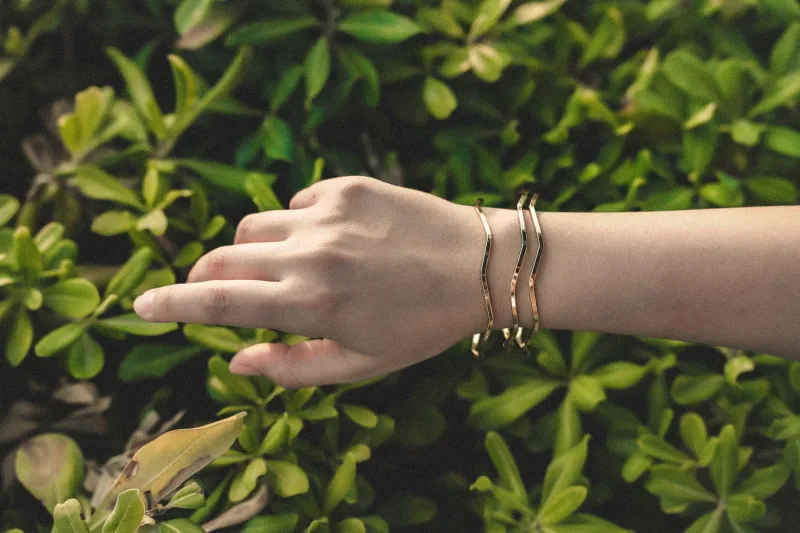
Marcus Chen, forty-one, is a San Francisco-based technology executive who has collected jade for over a decade. He wears a pale green jadeite bangle daily, and he will tell you, without embarrassment, that he believes it affects his sense of calm and focus. "I know what the science says," he acknowledges. "Or rather, what it doesn't say. But I also know how I feel when I wear it versus when I don't. That's real to me, even if it isn't measurable."
This is a position that deserves respect, not condescension. The relationship between material objects and psychological state is well-established in behavioral science, even when the mechanism is not metaphysical. The ritual of wearing a significant piece of jewelry—the weight of it, the tactile sensation, the visual reminder of what it represents—can genuinely influence mood, attention, and self-perception. This is not the same as the stone emitting healing energy. But it is not nothing.
The problem arises not with collectors like Marcus, who hold their beliefs with self-awareness and intellectual humility. The problem arises when the market makes claims on behalf of the stone that it cannot substantiate, and charges accordingly.
The Wellness Premium and Its Discontents
In recent years, a segment of the luxury wellness market has marketed jade objects—rollers, gua sha tools, palm stones, and jewelry—with language that implies specific physiological benefits. Improved circulation. Lymphatic drainage. Hormonal balance. Cellular regeneration. These claims, when they appear in marketing materials, are not accompanied by clinical evidence, because clinical evidence for them does not exist.
For the sophisticated collector, this is more than a philosophical concern. It is a market distortion. When a jade piece is priced in part on the basis of wellness properties it cannot be demonstrated to possess, the buyer is paying for a narrative rather than a material reality. And when that narrative is later questioned—as it increasingly is, in a media environment that is growing more sophisticated about wellness claims—the perceived value of the piece can deflate in ways that have nothing to do with the quality of the stone itself.
Dr. Rachel Okonkwo, a physician and occasional contributor to discussions about wellness marketing in luxury consumer goods, frames the issue directly: "The jade itself is not the problem. Jade is a beautiful, historically significant material with genuine cultural depth. The problem is when marketing language makes implicit or explicit health claims that consumers may take seriously and that have no evidentiary basis. That's not luxury. That's misdirection."
What Transparency Actually Looks Like
The most admirable position a jade brand or retailer can take—and the one that most reliably serves the long-term interests of both the market and the collector—is one of clear-eyed transparency.
This means presenting the cultural and symbolic history of jade with accuracy and depth, because that history is genuinely compelling and requires no embellishment. It means acknowledging that the stone's significance in various traditions is real and meaningful without conflating cultural significance with clinical efficacy. And it means being explicit about the distinction between what collectors may personally experience or believe and what can be verified through evidence.
Several of the most respected dealers and ateliers in the American jade market have already moved in this direction. Their marketing speaks to provenance, craftsmanship, cultural lineage, and aesthetic excellence—all of which are defensible and substantive. They allow the stone's genuine qualities to carry the weight of the sales conversation, rather than supplementing those qualities with claims the stone cannot support.
The Deeper Argument for Honesty
There is a business case for transparency, and it is not subtle. The affluent consumer who is most likely to build a serious jade collection over decades—acquiring significant pieces, developing genuine connoisseurship, and eventually participating in the secondary market—is precisely the consumer least likely to sustain a relationship with a brand whose credibility they have reason to question.
Luxury, at its most enduring, is built on trust. The collector who feels that they have been sold a mythology alongside their stone may eventually resent the mythology more than they value the stone. The collector who was told the truth—about what jade is, what it represents culturally, and what it cannot do physically—is the collector who builds a relationship with the material on solid ground.
Jade is extraordinary enough without the embellishment. Its history is ancient and documented. Its beauty is undeniable. Its cultural resonance is genuine and deep. The collectors who know this most fully are those who were told the truth from the beginning—and who have spent years discovering, through their own experience, that the truth was more than sufficient.