Jade in Every Hue: A Personal Guide to Choosing the Color That Speaks Your Truth
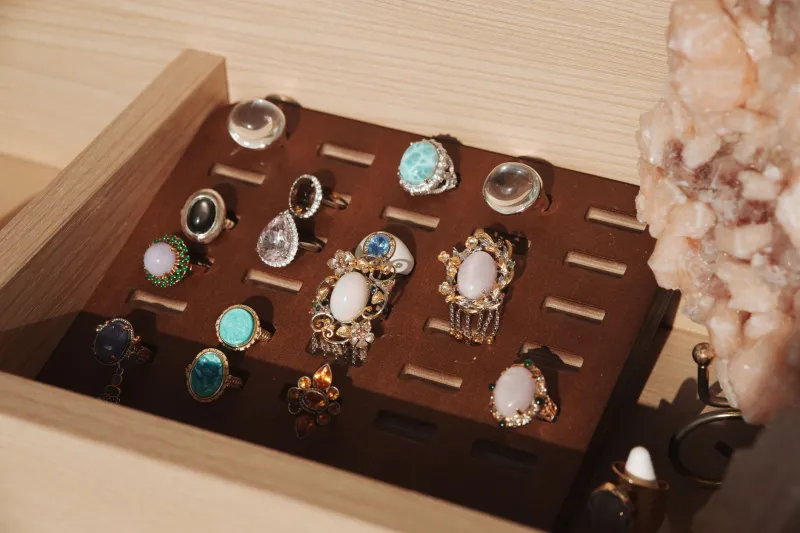
There is a moment, familiar to anyone who has stood before a well-curated display of jade pieces, when the eye is drawn not to the largest stone or the most elaborate setting, but to a particular color. Something quieter. Something that feels, inexplicably, like recognition. That instinct is not accidental. Across thousands of years of human history, jade has functioned as a language — one spoken not in words, but in color, texture, and translucency.
For the contemporary American collector or first-time buyer, understanding that language transforms the act of selecting a jade piece from a purely aesthetic exercise into something far more intimate. It becomes a form of self-expression, a declaration of values, and in many cases, a deeply personal statement about who you are and how you move through the world.
The Green Family: Imperial, Emerald, and Everything Between
When most people picture jade, they picture green. And within that single descriptor lies an entire universe of variation. Imperial green jadeite — the rarest and most coveted variety in the world — is characterized by its vivid, semi-transparent emerald tone, sometimes described as the color of a fine glass of Bordeaux held up to sunlight. It is saturated without being dark, luminous without being pale.
Historically, imperial green jade was reserved for Chinese royalty. Emperors wore it not merely as ornamentation, but as a symbol of divine authority, moral virtue, and cosmic harmony. In Confucian philosophy, jade's five virtues — benevolence, wisdom, courage, justice, and purity — were embodied in its physical properties: its warmth, its translucency, its resonance when struck.
For the modern wearer, choosing imperial green is a statement of confidence and discernment. It signals an appreciation for rarity, a comfort with attention, and a connection to something larger than personal taste. Those drawn to imperial green tend to value excellence in all its forms — not ostentation, but genuine quality.
Lighter greens — apple jade, moss-in-snow, and pale celadon varieties — carry a softer energy. They speak to balance, to a grounded sensibility, to someone who finds beauty in the natural world without needing it to announce itself. These shades pair beautifully with understated American wardrobes built around quality basics, and they transition effortlessly from boardroom to dinner table.
Lavender Jade: The Stone of Quiet Complexity
Lavender jade occupies a singular position in the collector's world. Neither as commercially dominant as green nor as dramatically striking as black, it rewards those willing to look closely. Its violet-to-lilac tones emerge from trace amounts of manganese within the stone's crystal structure, making each piece genuinely unique.
In Chinese tradition, lavender jade is associated with spiritual awareness, emotional healing, and the cultivation of inner life. It has long been gifted to those navigating transitions — new chapters, grief, creative rebirth. In the West, its resonance with mindfulness culture and the growing emphasis on emotional intelligence has made it increasingly appealing to a generation of affluent buyers who are as invested in their inner landscape as their outer presentation.
Lavender jade suits the collector who resists easy categorization. It is the choice of the person who reads widely, travels thoughtfully, and furnishes their home with objects that have stories rather than simply status. Paired with neutral tones — ivory, camel, soft charcoal — it becomes quietly extraordinary.
White and Pale Jade: Purity, Precision, and Understated Power
White jade, including the celebrated mutton-fat nephrite prized throughout Chinese imperial history, carries connotations of moral clarity, refinement, and an almost architectural sense of order. The finest white jadeite is nearly translucent, with a glow that seems to emanate from within the stone rather than reflect off its surface.
In many Asian cultures, white jade was considered the most spiritually potent variety — its purity seen as a mirror of the ideal human character. In contemporary Western contexts, it resonates with the principles of quiet luxury: the deliberate rejection of excess in favor of precision, quality, and enduring elegance.
For the American buyer, white jade makes a compelling case as an alternative to traditional pearl jewelry. It offers a similar sense of refinement and formality, but with greater geological rarity and a far richer cultural heritage. Those who gravitate toward white jade tend to be methodical in their choices, deeply private in their values, and genuinely uninterested in trend-driven consumption.
Black Jade: The Stone of Strength and Sovereignty
Black jade — whether jadeite or nephrite — derives its dramatic depth from iron and graphite inclusions. It is, in many respects, the most assertive member of the jade family. Ancient Mesoamerican civilizations, including the Olmec and Maya, used black jade in ceremonial contexts associated with power, protection, and the underworld's transformative forces.
In contemporary fashion, black jade occupies an interesting position. It bridges the gap between the minimalist jewelry aesthetic popular in American urban markets and the gemstone's ancient symbolic weight. A black jade ring or cuff reads as modern and architectural while carrying millennia of cultural gravity beneath its surface.
The person drawn to black jade is typically someone who does not need external validation. They are decisive, self-possessed, and drawn to materials that have earned their authority through geological time rather than marketing campaigns.
Yellow and Russet Jade: Earth, Abundance, and Warmth
Yellow and russet jade — often nephrite varieties colored by iron oxides — are perhaps the most underappreciated members of the jade family in Western markets. In Chinese symbolism, yellow has long been associated with the earth element, with abundance, and with the generosity of spirit that comes from genuine security.
These warm-toned stones suit the collector who approaches luxury from a place of ease rather than aspiration. They are grounding stones, in both the literal geological sense and the metaphorical one. Paired with autumn wardrobes — rich burgundies, warm browns, forest greens — yellow and russet jade pieces carry an organic warmth that feels genuinely personal.
Choosing With Intention
The most meaningful jade purchases are rarely impulsive. They emerge from a period of looking, of learning, of sitting quietly with a stone and asking whether it reflects something true about who you are or who you are becoming. At Green's Jade, we believe that the right piece of jade does not simply complement an outfit — it completes a self-portrait.
Color is where that portrait begins. Whether you are drawn to the commanding presence of imperial green, the contemplative depth of lavender, or the sovereign authority of black, your instinct is worth trusting. The stone you reach for first has likely already told you something important. The only question is whether you are ready to listen.